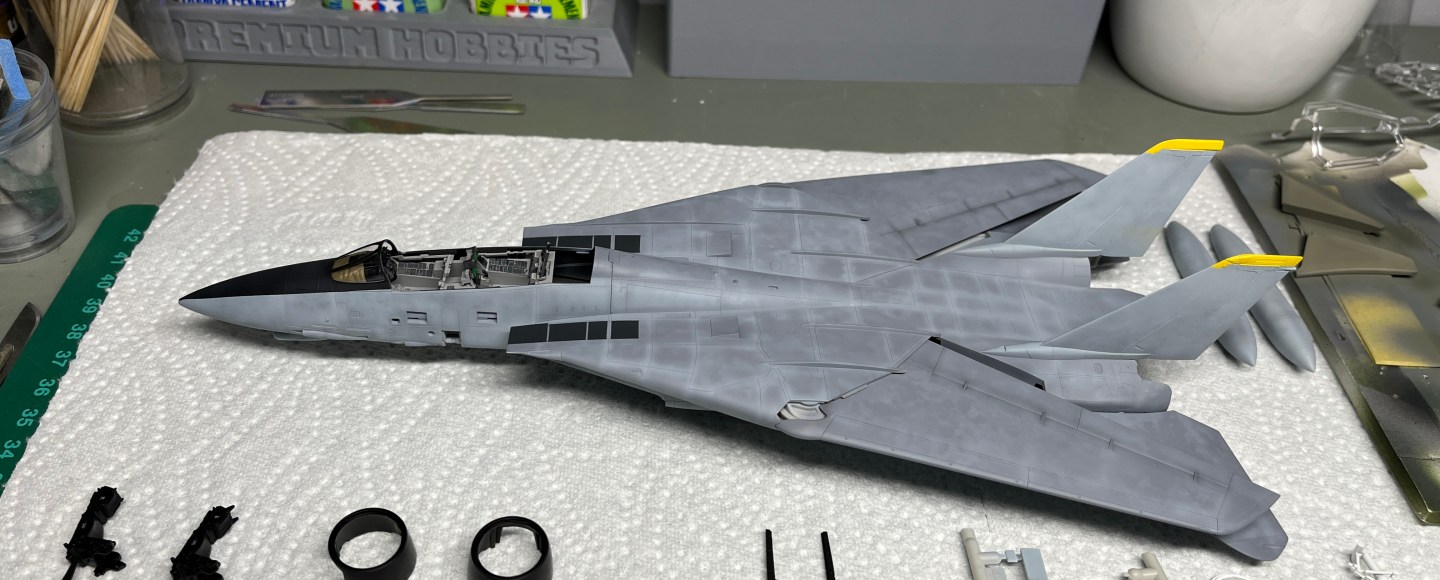

The last few days have been a real eye opener, proving that you are never too old to learn new tricks. I was happy with my work, because I’d not seen a reason to change it. As soon as I did, I realised that I could still improve and with some very simple steps, I did just that.
13th January 2026
Started the day off by blocking a visitor to my Facebook page. I’ve always made it clear that my page is a friendly space that I use to inform and hopefully entertain other modellers, so when I see a comment that does neither of those things, but is there simply to take a shot at me, I have zero tolerance. I don’t even care if that poster is a real person or a bot, the result is the same: instant block.
Having dealt with the niceties of social media, I had the pleasure of taking my granddaughter to school, before continuing with the painting of my Tomcat.
If the trial use of SMS and MRP paints before Christmas taught me one thing, it was that my airbrushing techniques needed a refresher course. Over the years I’ve airbrushed pretty much every day, using enamels and then acrylics across a multitude of subjects and genres. I’ve never really seen the need to alter my approach, so when I began to use paints that were both ultra thin and in need of very low pressure to apply them, it made me think about the other materials I was using and how they could be applied in a different way.
So having successfully used both of those paint ranges a month or so ago, I started to alter the dilution of my Tamiya paints as well as the pressure used to airbrush them in place. Normally, dilution would be around 50/50, pressure around 20psi. For the Tomcat, that has been changed to around 70/30 thinner to paint and 10psi through the brush. The results have been revelatory. Paint atomises more easily and demarcation lines, often the bane of my life, are easier to spray in place. Such is the difference, even with .3mm head and needle, I’m finding that lines of less that 1mm are achievable with ease.
But it’s the quality of the finish that’s really impressed me. We’ve all had times when paint can build up to create a rough texture on a model, catching in corners and against edges. Despite applying many layers of paint to the surfaces if the Tomcat, I’ve seen no such issues, the finish being perfectly smooth without further work.
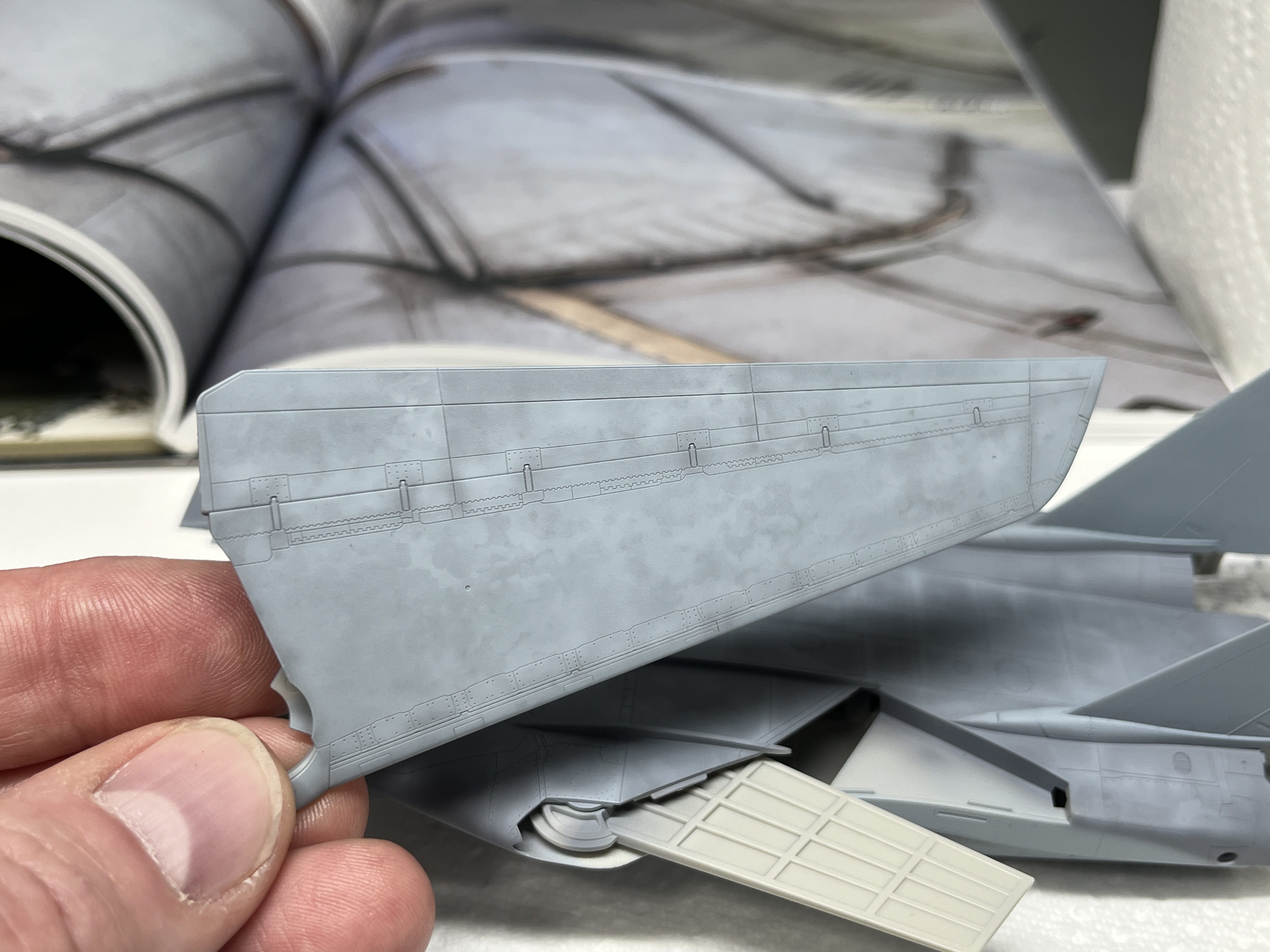
The last few days have been a real eye opener, proving that you are never too old to learn new tricks. I was happy with my work, because I’d not seen a reason to change it. As soon as I did, I realised that I could still improve and with some very simple steps, I did just that. I’d call that a very welcome win.
See you tomorrow.
 SPENCER POLLARD'S KIT BOX
Hi Spencer,
Is that Tamiya Acrylic you are talking about ?
Thanks
Alan Ashton
LikeLike