
I couldn’t help help but imagine the sight of the subs that would have been seen there during the Second World War, both in the water and perhaps the dry docks that were available for use.
14th September 2025
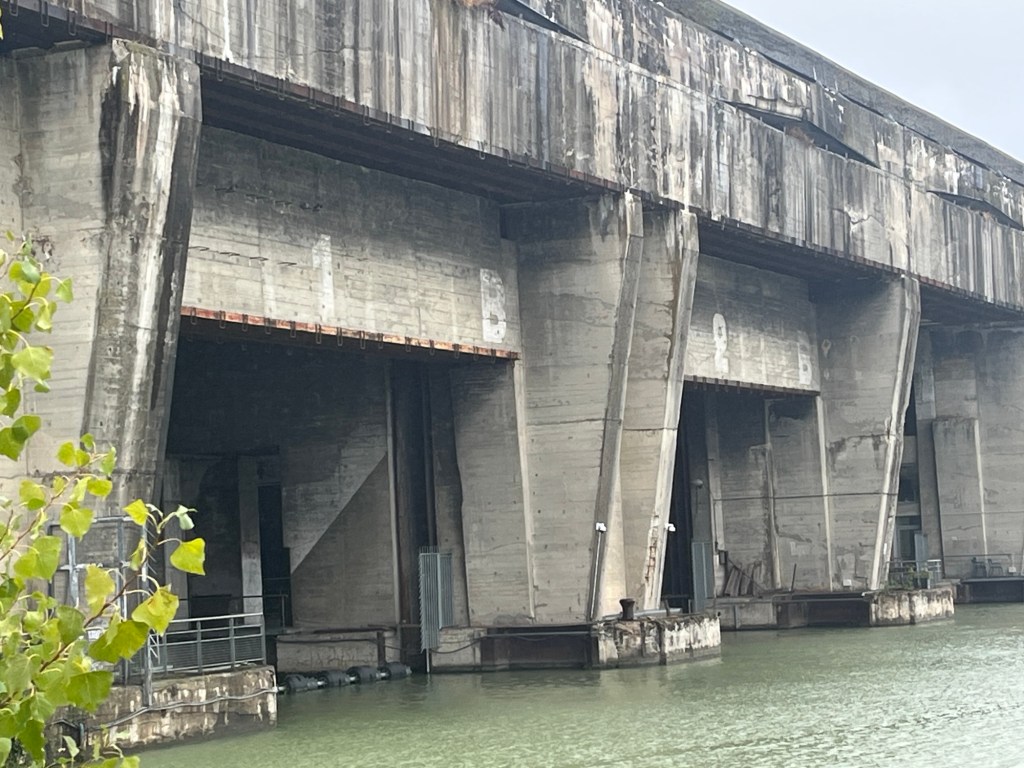
Though much of this week’s holiday has featured trips to small French towns, chateaus and vineyards, today was an altogether different proposition as we took a trip to the stunning city of Bordeaux to see amongst other things, their Second World War German sub pens.
Though only operational for around a year, these mammoth structures bear testament to the engineering skill of the German forces during that conflict. Taking almost 19 months to construct, the labour of almost 7000 workers still stands as a silent sentinel, a reminder of an appalling conflict and the lengths that the Germans went to to gain an advantage in the Atlantic Ocean.
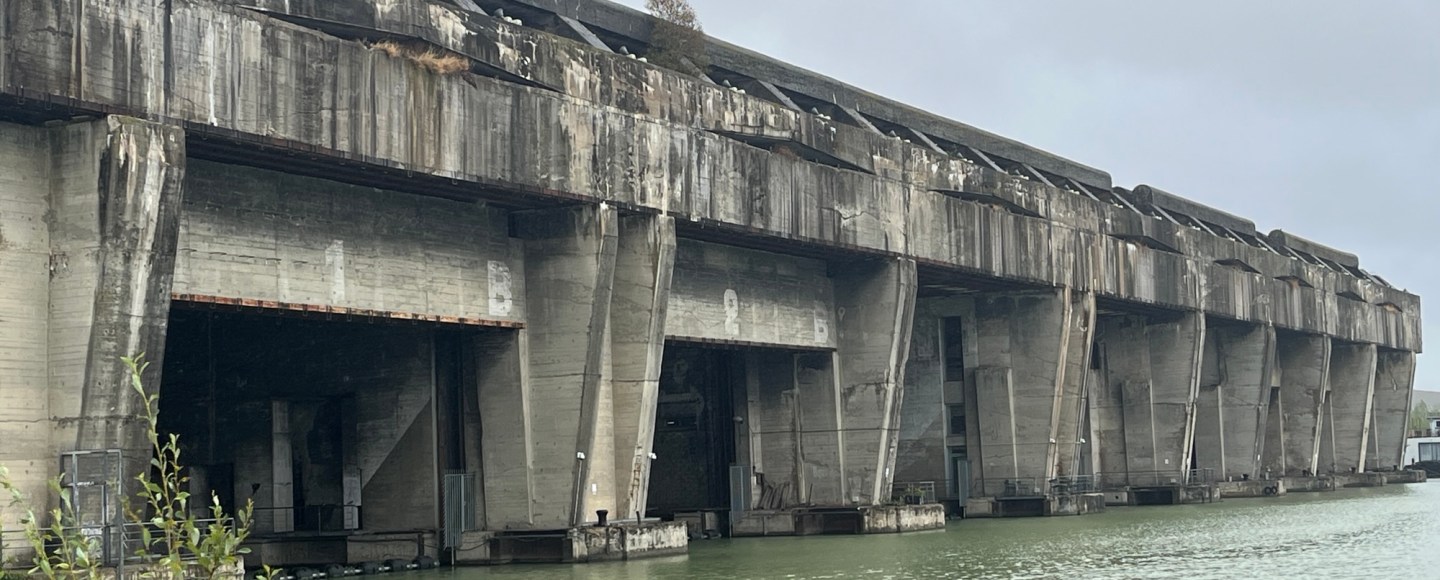
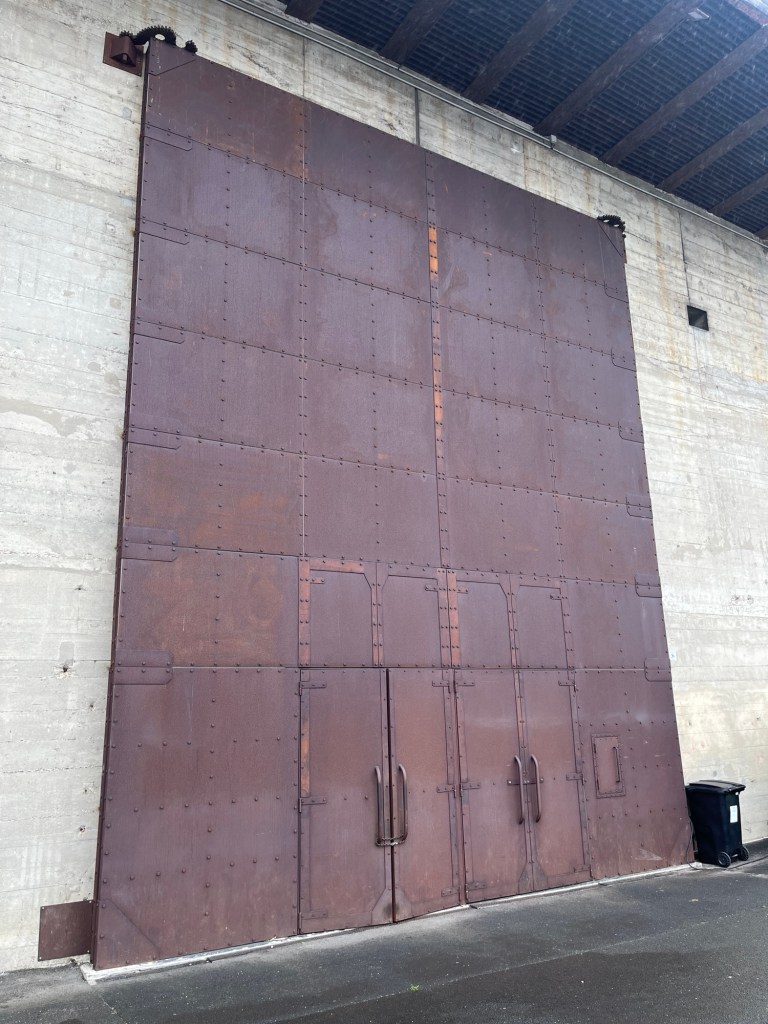
Nothing really prepares you for the sheer scale of the pens. They are enormous. Dominating the harbour on the edge of which they sit, the 11 pens, covered over with a 9m deep roof, capture the imagination like nothing I have seen before. Just starring at them from a distance, I couldn’t help but visualise what it must have been like as 1943 rolled into 1944 and those subs slowly meandered out from their berths into be harbour, and on through the lock gates that sealed off the harbour from the rest of the river Garrone.
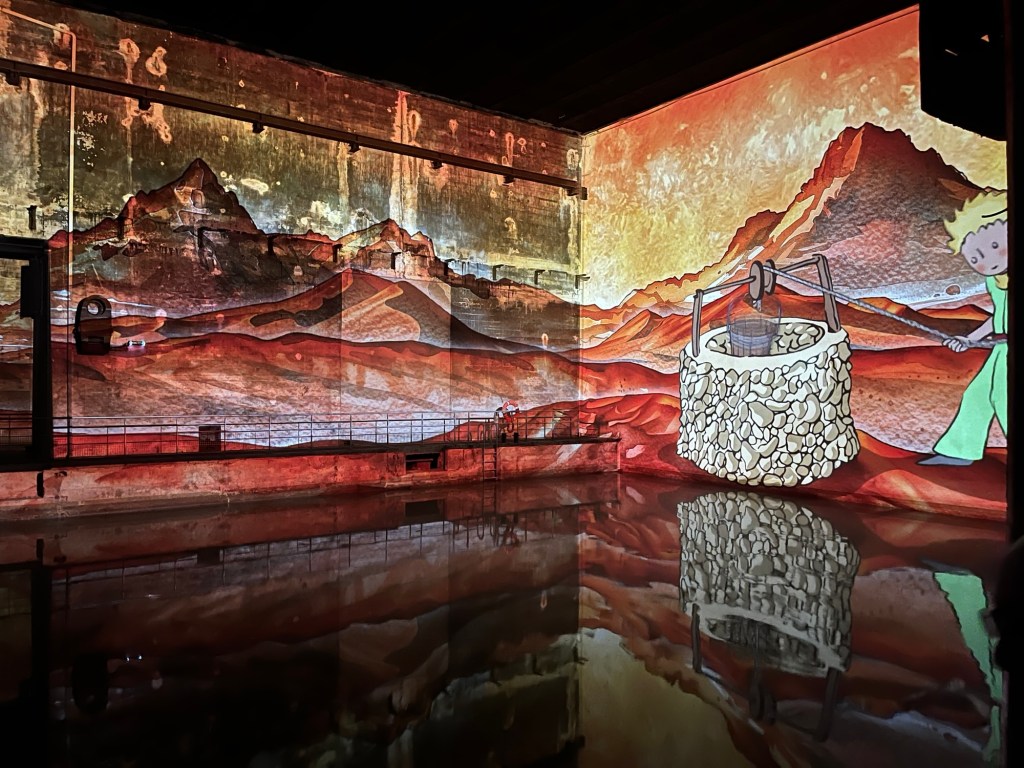
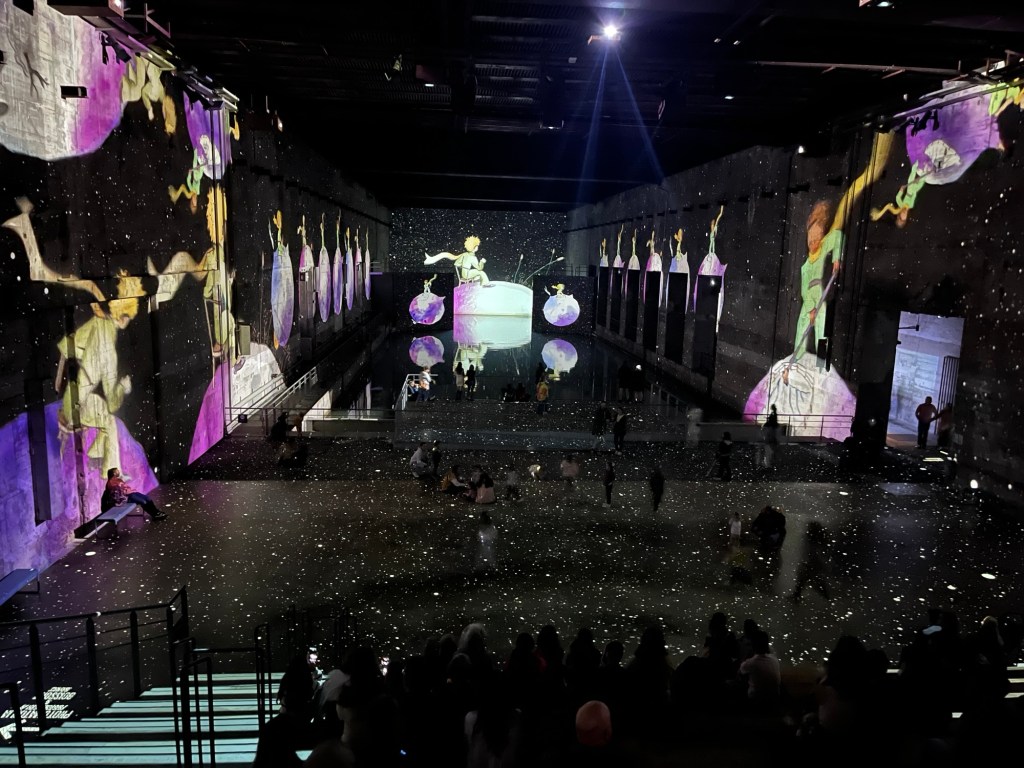
Today, 80 years on, three of the sub pens are used for a much more peaceful purpose: that of an interactive art installation. Featuring music and incredible projected images, you can’t help but be captivated by the transformation from wartime base, to peacetime visitor attraction. Such is the shift in use, I couldn’t help but wonder what those sailors and their associated crew would have made of the change had they been transported 80 years into the future and planted within the cavernous halls that we visited today.
Taking in the pens was a truly extraordinary experience. Though captivated by the slide shows and music, I could see enough of the pens to gain a sense of their size and presence. Standing on the walkways and looking into the still waters now trapped inside those first three bays, I couldn’t help help but imagine the sight of the subs that would have been seen there during the Second World War, both in the water and perhaps the dry docks that were available for use. It must have been an intense place to work, the noise and smells being overwhelming as each one was prepared for action. Who wouldn’t have wanted to see that?
I’m so pleased that we had the chance to see those pens this afternoon. I now have a much better feel for how the subs would have been berthed and should I ever want to build one, maybe I could draw on today’s experience to do so. Who knows, one day, I may do just that.
See you tomorrow.

 SPENCER POLLARD'S KIT BOX
poignant & very moving Spencer, just goes to show how far they wanted to go with their plans to dominate the world.
LikeLiked by 1 person
i see diorama subjects coming.
LikeLike
Presumably with the correct subs in it unlike in the audio visual /projected image show shown .How can vast sums be spent and such schoolboy errors made.Or maybe the best part of a lifetime / half century being a ‘war’ anorak makes one pedantic ?( It’s a great , moody image mind you )
LikeLiked by 1 person
Well I thrust out intrepid traveler is capable of utilizing the correct subs. Also with his skill level well demonstrated previously they’ll be fantastic.
LikeLike
I had no idea such a place existed. Such is the measure of my ignorance when the obviousness of it is revealed—of course all those subs “lived” somewhere more than the simple dock here in Halifax.
The scale of this new place seems incredible. By the time you described the thickness of the roof I was equally “that makes sense” as I was speechless. That coupled with your observations on what it must have been like here just as a place of work.
It seems fitting that it’s now a place for art and presentations that explore its magnitude. I believe that art is not the product but the motivation to explore our relationship with the world as a means of understanding it and how we experience it. Installations like you describe seem to powerfully do that.
Talk about a new entry on a bucket list! Wow
Chris
LikeLike
Not just here, La Rochelle in the south is still used by the French Navy, I’m pretty sure. In St Nazaire they pens are intact and they have a 1950’s French/German Sub as a museum display. A couple other places along the coast as well. Massive, massive amounts of concrete
LikeLiked by 1 person
Just unimaginable amounts of concrete. Walking to work, this morning, I’m still trying to visualize it all.
LikeLike