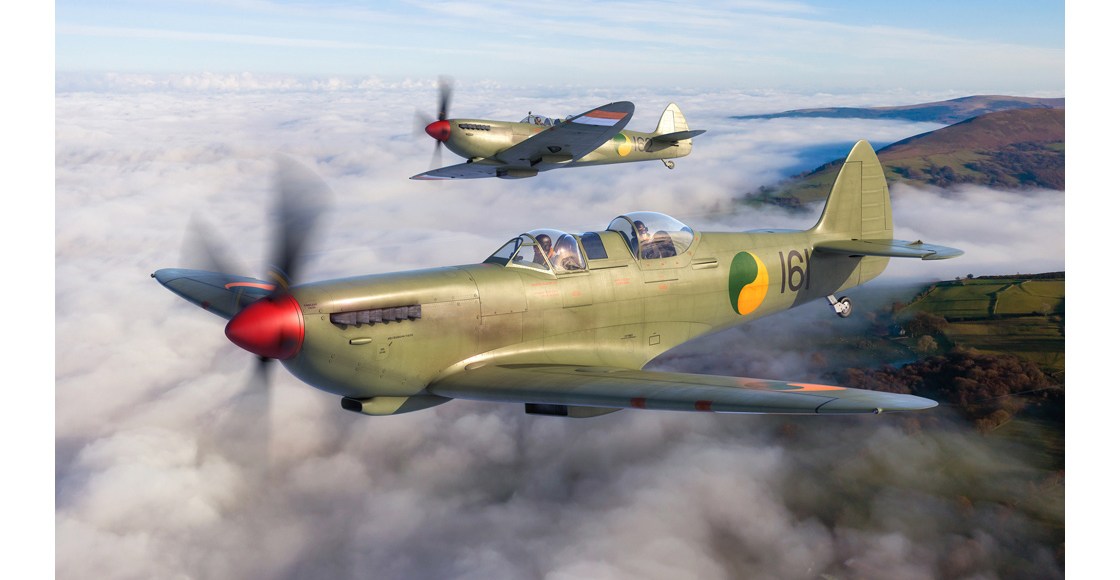

I’m rather in two minds as to whether to further work the finish to add some interest or just, for once apply the decals, wash the panel lines, and be done with it.
8th July 2025
Despite my desire to be clever and impress as many people as possible with my unparalleled modelmaking skills (yeah, right…) most days are a simple passage of time, during which I carry out easy to complete steps on the way to finishing a model. Today, was one of those days.
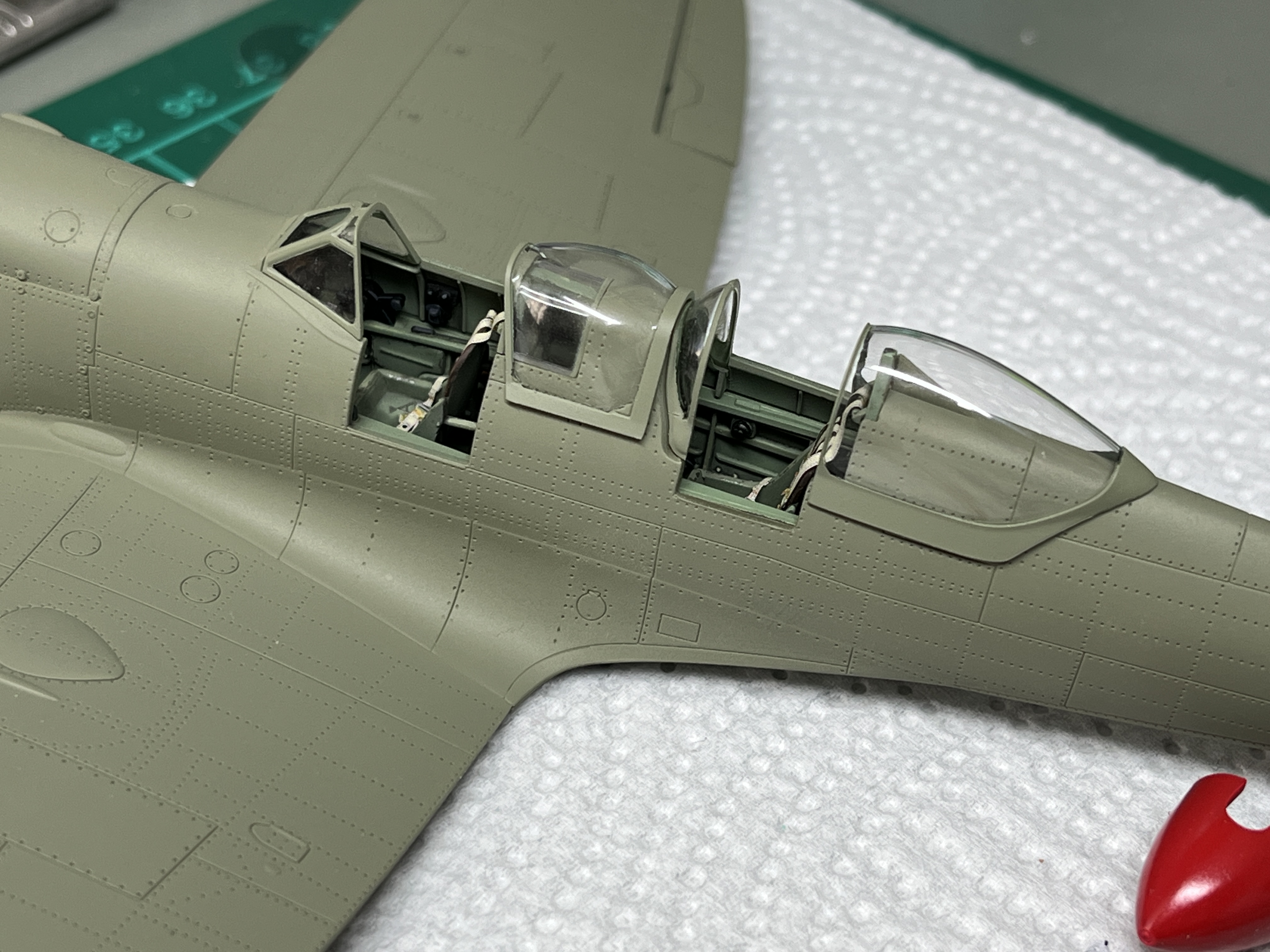
Having assembled my little Spitfire, this morning saw me complete its basecoat and then mask off the canopies ready for each of these to be painted to match. Like most rounds of masking that I have to do when aftermarket sets are not holding my hand, this morning’s work was, well, mundane and a little tedious. Spitfire canopies are not exactly complex, though they are curvaceous with tiny frames that need to be carefully painted if the delicacy of the originals is to be replicated. And that my friends makes them tricky to mask, especially when the glazing is a thin as that in this new Spitfire TR.9.
As usual, my main weapons of choice were Tamiya’s collection of ‘kabuki’ tapes, as well as their vinyl products used to create curves. I have to say that the latter is finding its way into my workflow more and more these days, their ease of use and ultra-sharp edges, allowing accurate masking to be carried out with ease. Offered in a variety of thin sizes, I also like to cut them down further, 1mm strips being particularly useful if your canopies are small and their glass panels blown, rather than flat.
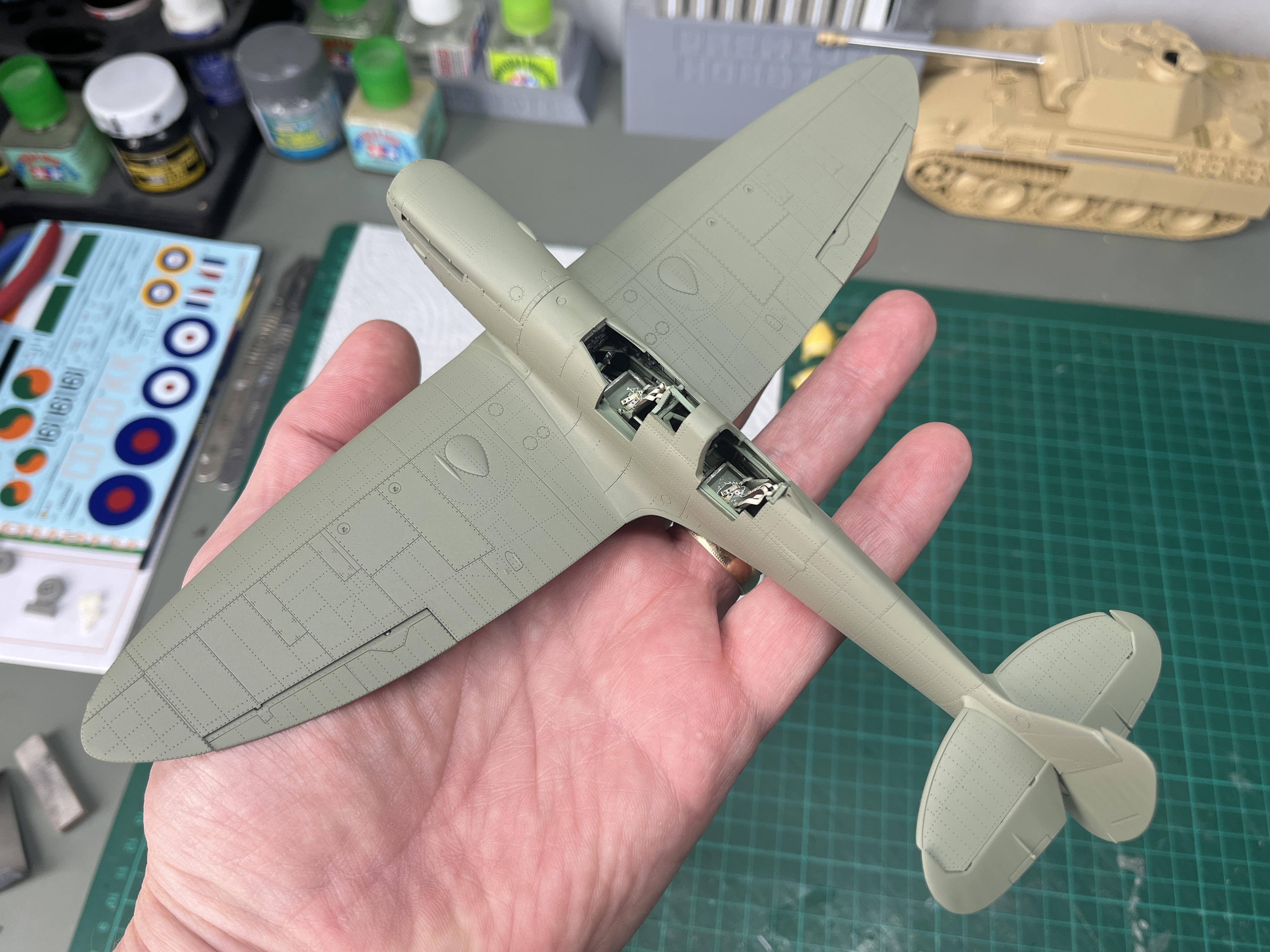
So today, I completed the paintwork and now have a model on my desk that I rather like in its flat, unsullied finish. I’m rather in two minds as to whether to further work the finish to add some interest or just for once apply the decals, wash the panel lines, and be done with it. It’s been a very long time since I’ve finished a model in that way, but I guess I could argue that these training machines would have been well-kept, rather than overly scruffy. Or I could simply say that I fancied building a model clean for once and be done with it. Let’s face it, the model is still going to look lovely no matter what I do with it, it is a Spitfire after all!
Speaking of finishes, I’ve also completed the basecoats on the F-35C, so I now have a painted model sat on my desk waiting for its details to be brought out as I discussed, yesterday. Sounds easy, right, but I had a bear of job painting the model, the heat that is once again building over the UK, messing with the Tamiya lacquers I was using. Despite thinning them down, dropping the pressure and working carefully, the finish still felt rough to the touch, only some work with Micromesh helping to achieve the perfection I was after. With the temps only increasing this week, I doubt things will get any better, so I will no doubt have to wrestle this greasy pig to the deck as best I can. Thankfully I have plenty of time and a stack of Micromesh to help along the way…
See you tomorrow.
HERE ARE SOME OF MY LATEST POSTS FOR YOU TO ENJOY!
- A MODELMAKER’S LIFE: HELLO AND GOODBYE…FOR NOW!
 27th February 2026 I mentioned yesterday that we are on holiday next week. That being so, I’ve decided to restContinue Reading
 - A MODELMAKER’S LIFE: WINDING DOWN…26th February 2026 With the end of the week fast approaching and the prospect of being on holiday next weekContinue Reading
- A MODELMAKER’S LIFE: FUTURE BOOK PLANS…
 The contents of my next two books are now finalised. Here are the details…
 - A MODELMAKER’S LIFE: A SIMPLE DAY OF WRITING…
 24th February 2025 Nothing much to discuss today as I’ve spent all of it in front of my computer, finishingContinue Reading
 - A MODELMAKER’S LIFE: LEOPARDS, METEORS AND MORE WORK ON MY NEW SPITFIRE BOOK…
 A mixed day filled with modelling, writing and the occasional hour spent designing a new modelling guide.
 SPENCER POLLARD'S KIT BOX
Looks great Spence
LikeLike
It is probably a truism, but it is indeed the case that the Irish Aer Corps T9 Spitfires were kept in a very clean condition. Unlike, say, Spitfires that served in the Battle of Britain, these were aircraft that might have had two, if not just one, “sortie” in a day, and that also there was a large number of support staff (what might be described – though not there – as “erks”). So you are absolutely right, and correct to the reality – in not using your normally excellent weathering techniques.
Cheers.
Philip (IPMS Ireland)
LikeLike