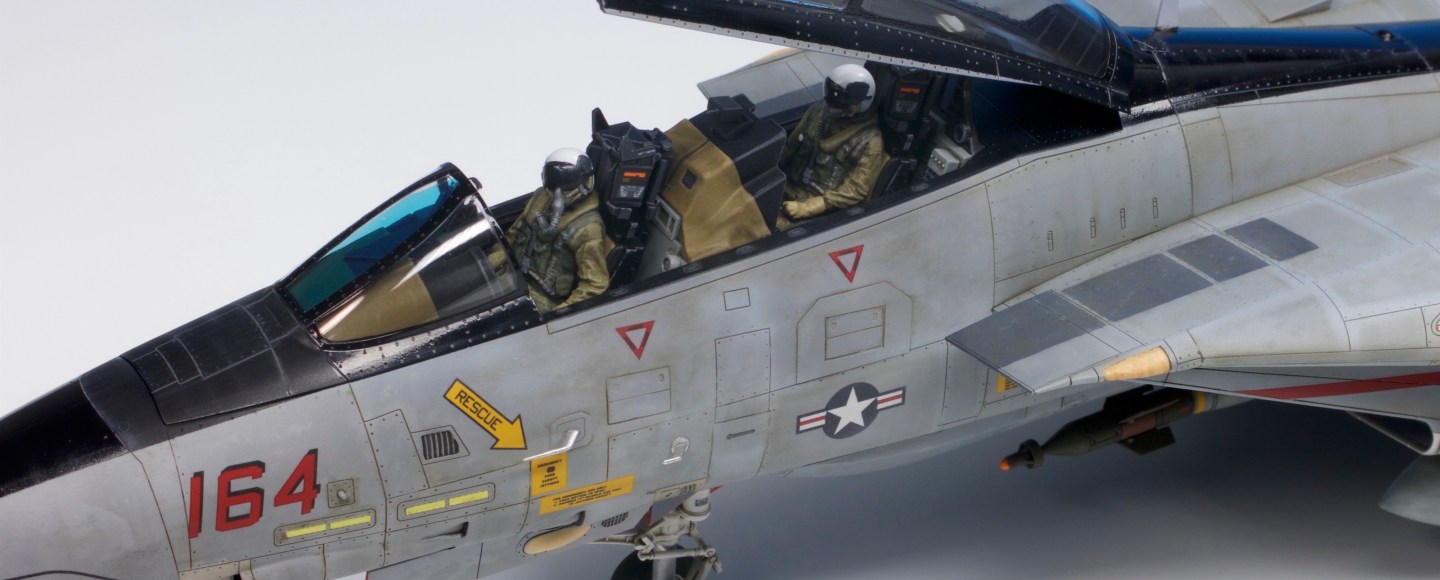

The last time if memory serves that I attempted this scheme was on another Tomcat, this time my Tamiya 1/48 F-14D that took almost a week to paint, and though this one is smaller, I’m not entirely convinced that this one will take any less time!
12th January 2026
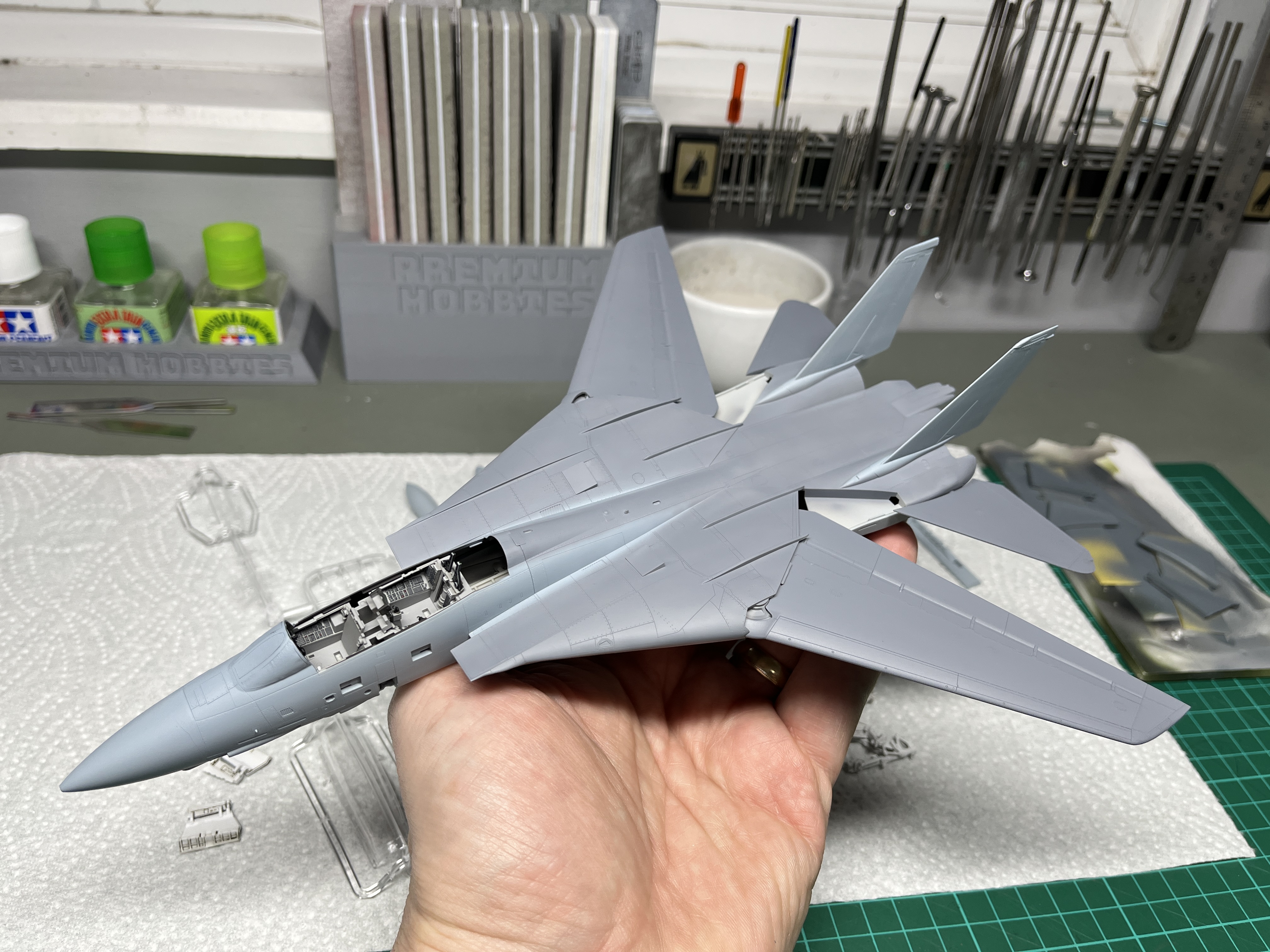
A very successful day today, only marred by a few unforced errors that I’m going to have to deal with down the line.
Despite still having this bloody cough, I seem to have at least recovered some of my energy levels, so today was all about bringing the Tomcat’s airframe together and then starting work on the paintwork. Plenty of this had already been done as I proceeded with construction, so it was really a case of filling in the unfinished areas, at least until the base layers had been completed.
The model itself is finished in three shades of grey though in reality, they tend to blend together to form a more homogenised look after several months at sea, troubled by layers of weathering and the inevitable touch-ups that these machines suffer from. Those greys, Light and Dark Ghost Grey and intermediate Blue Grey, are applied in what appears to be a fairly soft pattern that really needs to one airbrushed to create a realistic finish. So airbrush it I did.
Initially, I used my Iwata HP-CH to apply the very thin paint, low pressure helping to create a tight pattern. And then the airbrush stopped playing ball, a degree of lag as the needle was withdrawn through the nozzle, reducing control to a level I was not happy with. Cleaning, swearing, several attempts to correct the issue and then more swearing, seemed to have little effect, demarcations becoming all-but impossible to spray neatly.
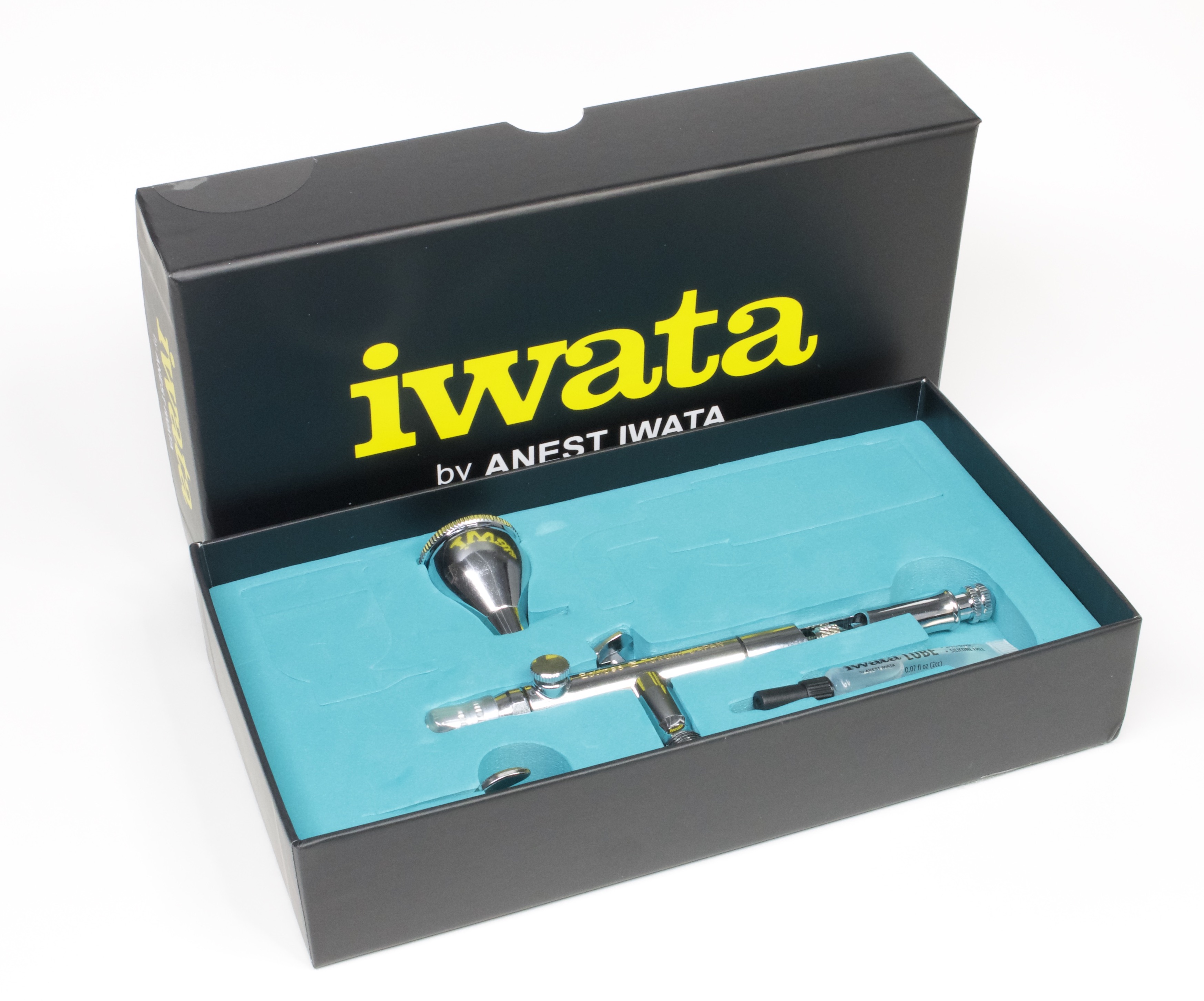
That being so, I decided to put the HP-CH aside (carefully, despite what was by now becoming a full-blown temper tantrum…) and use my brand-new Iwata Takumi Eclipse, instead. This allowed a far higher degree of control and almost perfectly defined edges between each of the three colours. The paint, incidentally, was all Tamiya, thinned with around 70% Tamiya Lacquer Thinner and sprayed at around 10 psi, a combination that I had been so pleased by with when using both MRP and SMS paints before Christmas.
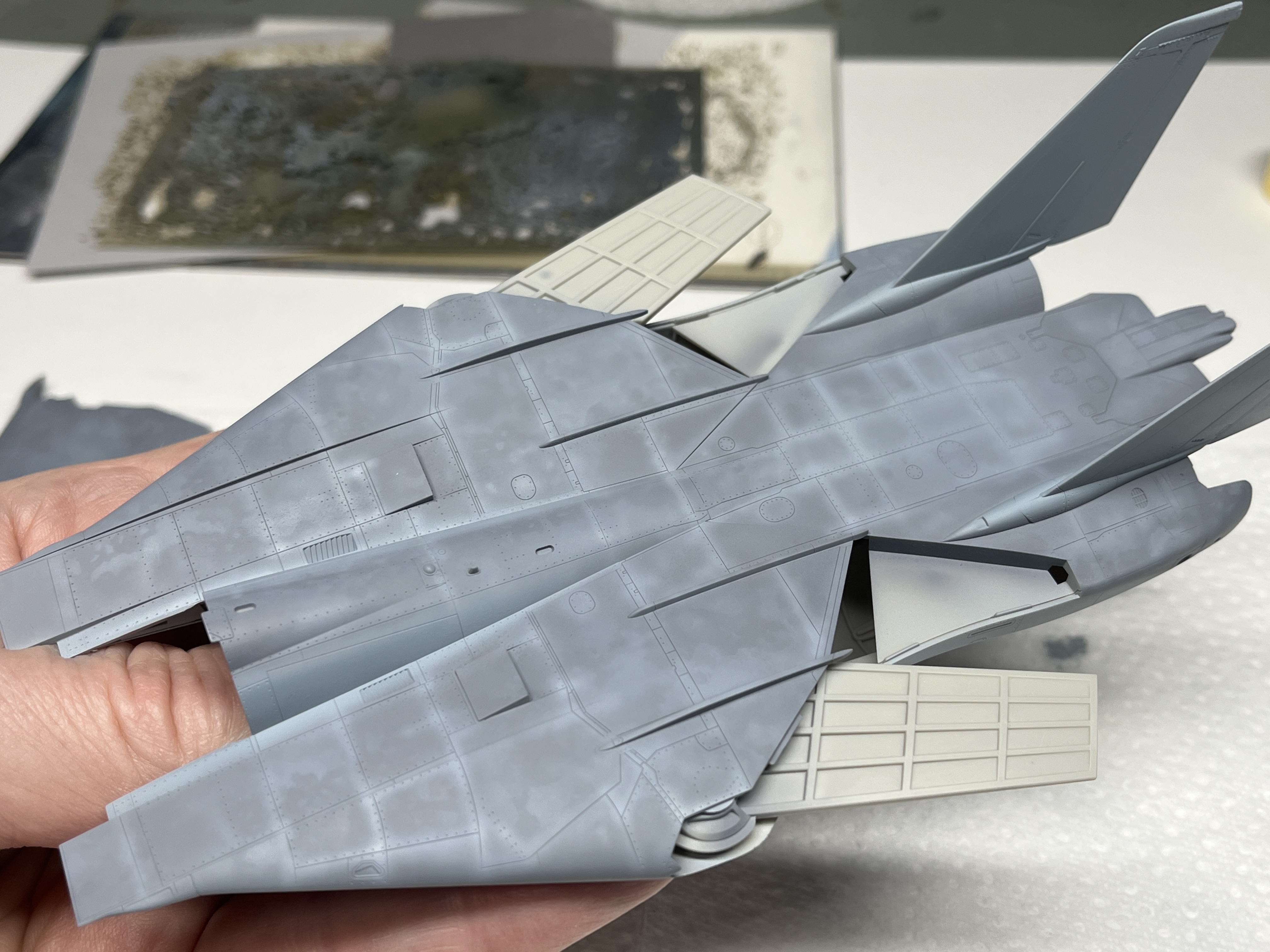
Having completed the camouflage to my satisfaction – at last – I could start work on the weathering – and I do mean: start. This will no-doubt take some time to complete, the real VF-2 machine I’m building being extremely weathered in use despite its CAG status. So far I’ve only applied some mottling using my texture templates, as well as the appearance of touched-up panels, all of which has been done with lightened versions of the upper blue-grey colour. This is definitely only the first step, reminding me why I tend to avoid TPS (Tactical Paint Scheme) aircraft where possible: they take so long to finish! There will be a lot more to come.
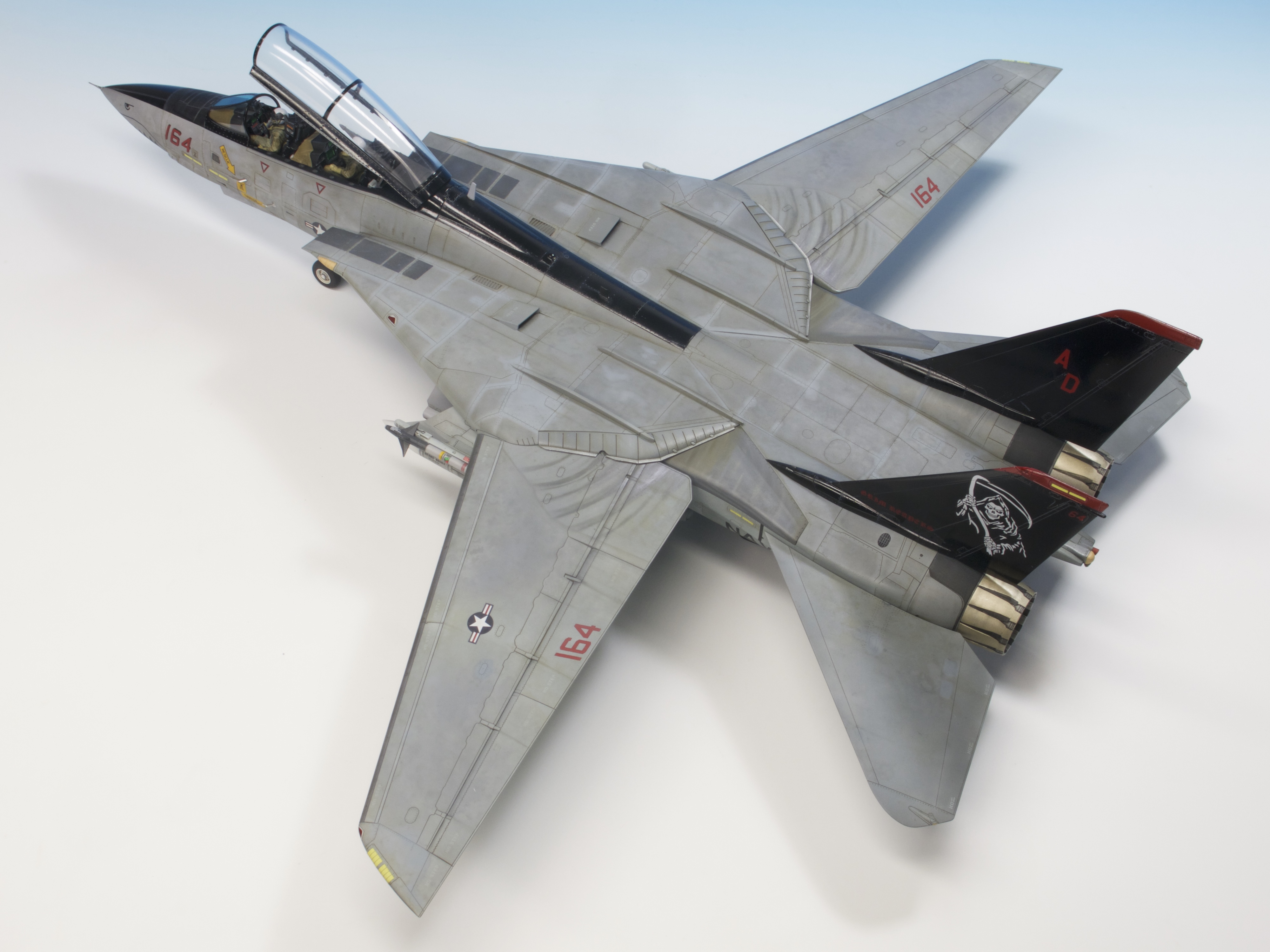
The last time if memory serves that I attempted this scheme was on another Tomcat, this time my Tamiya 1/48 F-14D that took almost a week to paint, and though this one is smaller, I’m not entirely convinced that this one will take any less time! It will be worth it though, this model contrasting nicely with the 1/72 Academy kit that I built and painted several years ago. More than that though, this one will debut at the Bolton IPMS show, so I really want it to be as complete as possible.
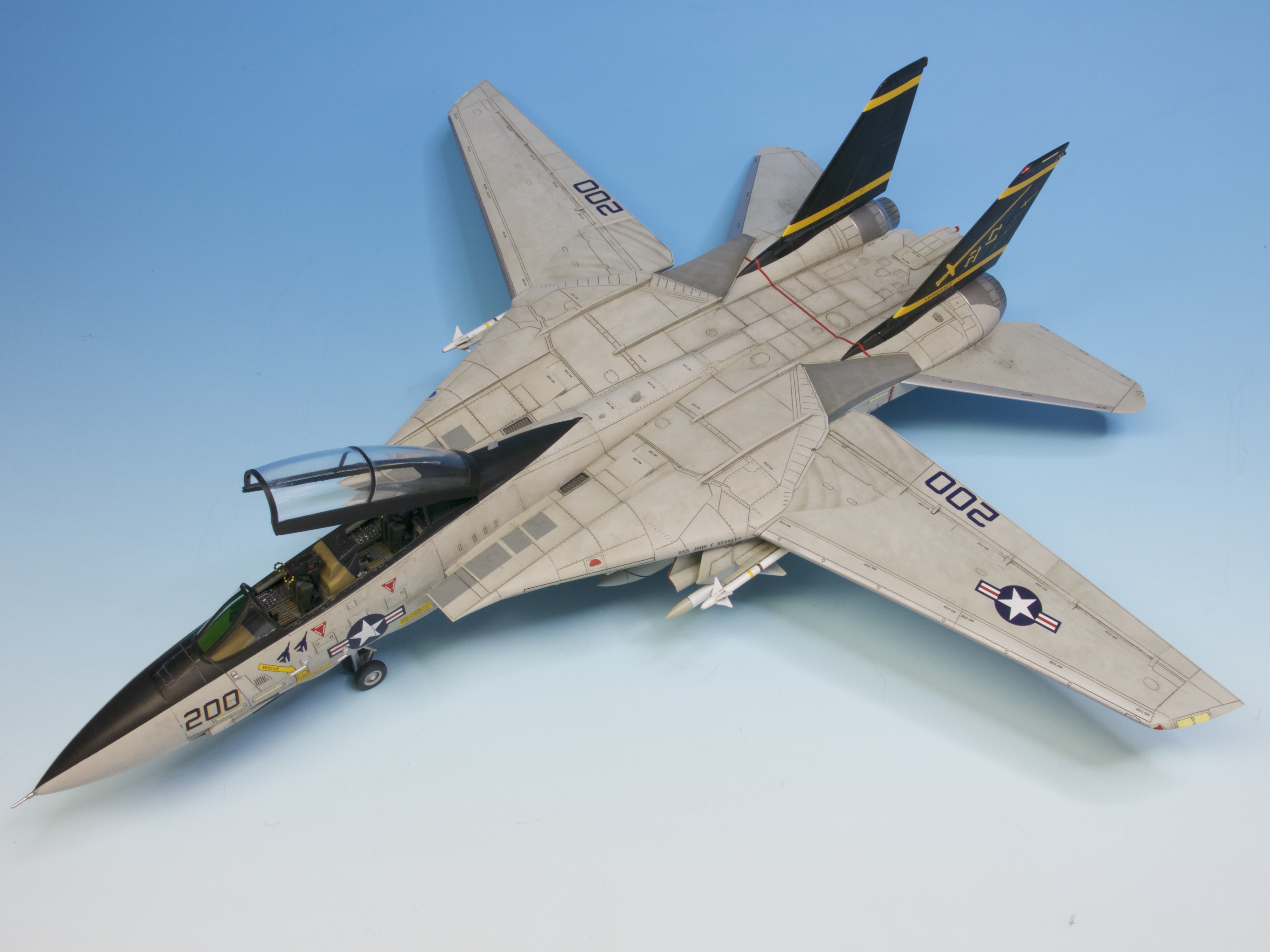
So a successful day then, with plenty done. In the morning I hope to complete more of the basecoats, more highlights being added to the lighter colours, before applying some contrasting shadows here and there. I can then apply the decals which will really bring this model to life, those VF-2 markings adding plenty of much-needed colour. I can’t wait!
See you tomorrow.
 SPENCER POLLARD'S KIT BOX
Smashing so far.
LikeLike