

Having made this decision, I hunted for pictures, finding many of the aircraft in immaculate schemes. Initially, this was my route to completion, but a chat with Marcus Nicholls, soon turned my head towards a more weathered approach.
18th July 2025
Supermarine Spitfire Mk.IXc – The Flying Dray

In the summer of 1944, after the D-Day landings, British troops pressing into Normandy faced fierce resistance—and a dry pint glass. Supplies were tight, and morale was vital. So, in one of the war’s most unexpected missions, Spitfire pilots took to the skies not just with ammunition—but with beer.
Ingenious airmen modified drop tanks and strapped barrels beneath their wings, delivering much- needed refreshment to parched troops across the Channel. Some called it “Operation Cheers.” These weren’t official missions. They were flights of morale. Spitfires—symbols of British grit—became airborne drays for a brief, glorious period.It wasn’t about luxury. It was about home. A cold beer in a hot war zone was more than a drink—it was a reminder of what they were fighting for.
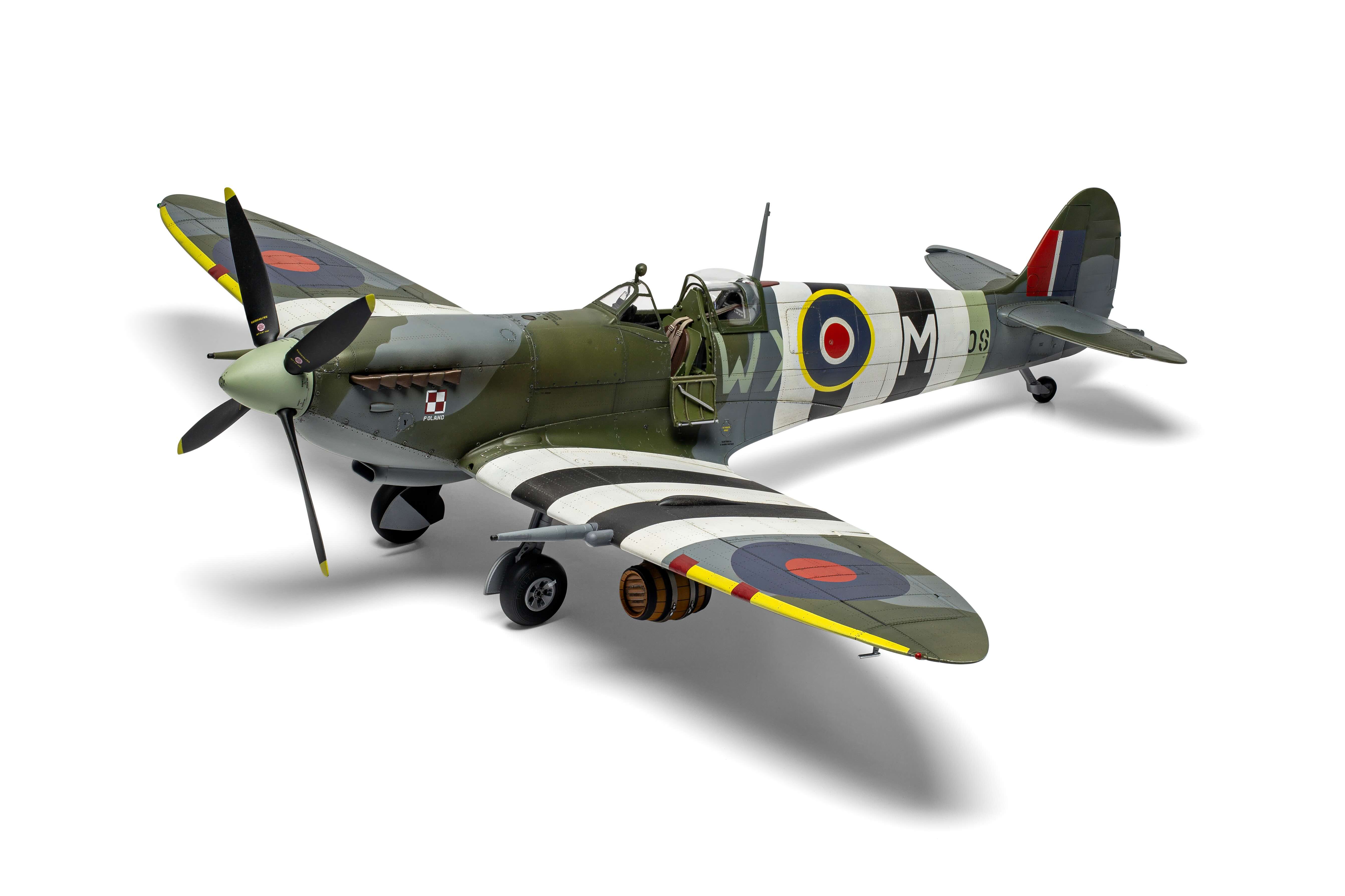
So, raise a glass to the RAF pilots who delivered courage, camaraderie, and casks—one flight at a time. Because even heroes need a pint!
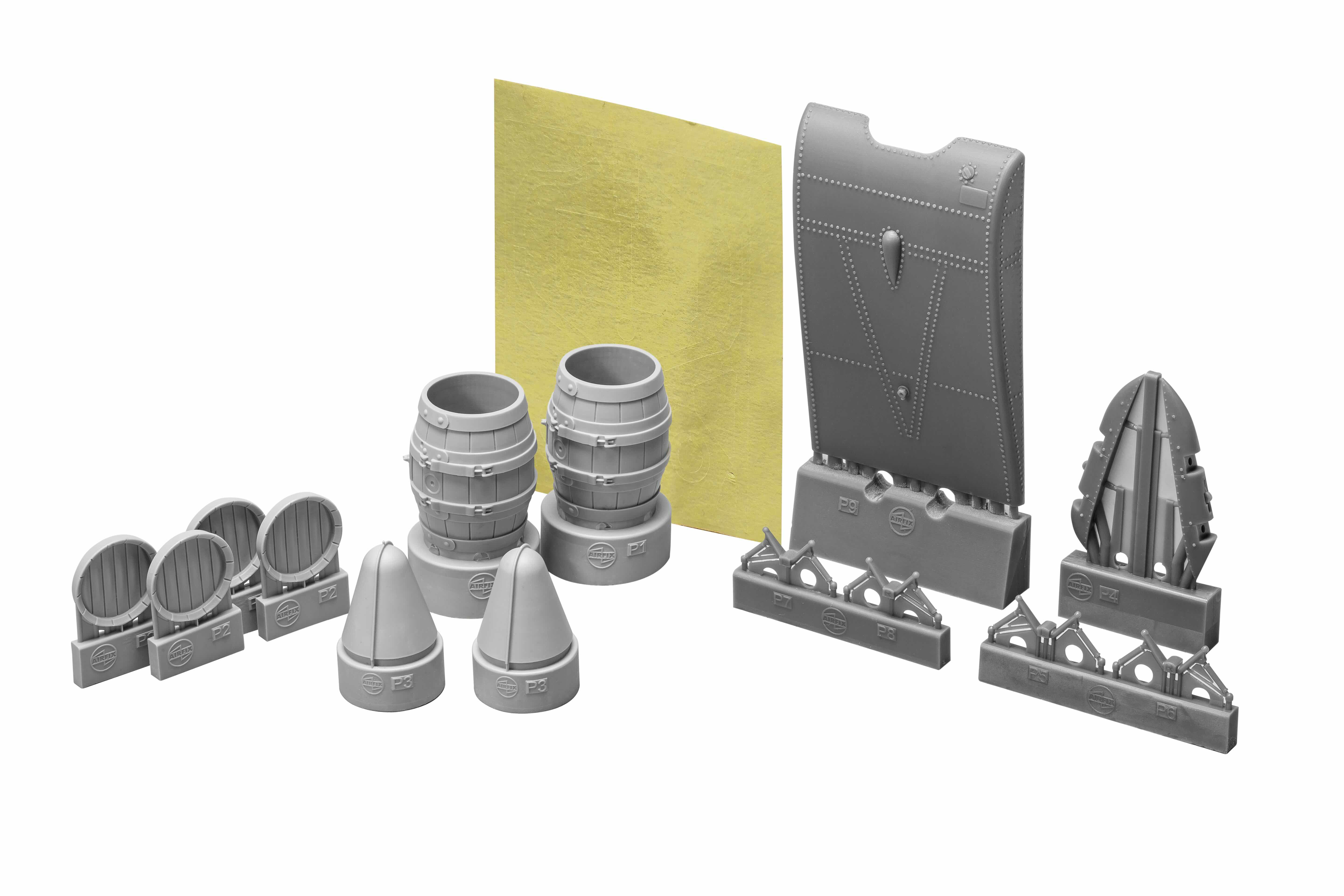
This Supermarine Spitfire Mk.IXc limited-edition kit in 1:24 scale includes parts required to truly replicate the beer carrying Spitfires ‘Flying Drays’.
Additional resin parts included;
- 2 x Beer barrels, including lids.
- 2 x Nose cones
- 2 x Bomb racks
- 1 x Slipper tank
Also included in this release is a masking set for the clear parts and a special edition pint glass, dedicated to ML208, one of the aircraft known to have participated in these missions. The kit consists of 448 parts, with an overall wingspan of 469mm and length of 397mm and is an Airfix first to supply resin parts and canopy masks.
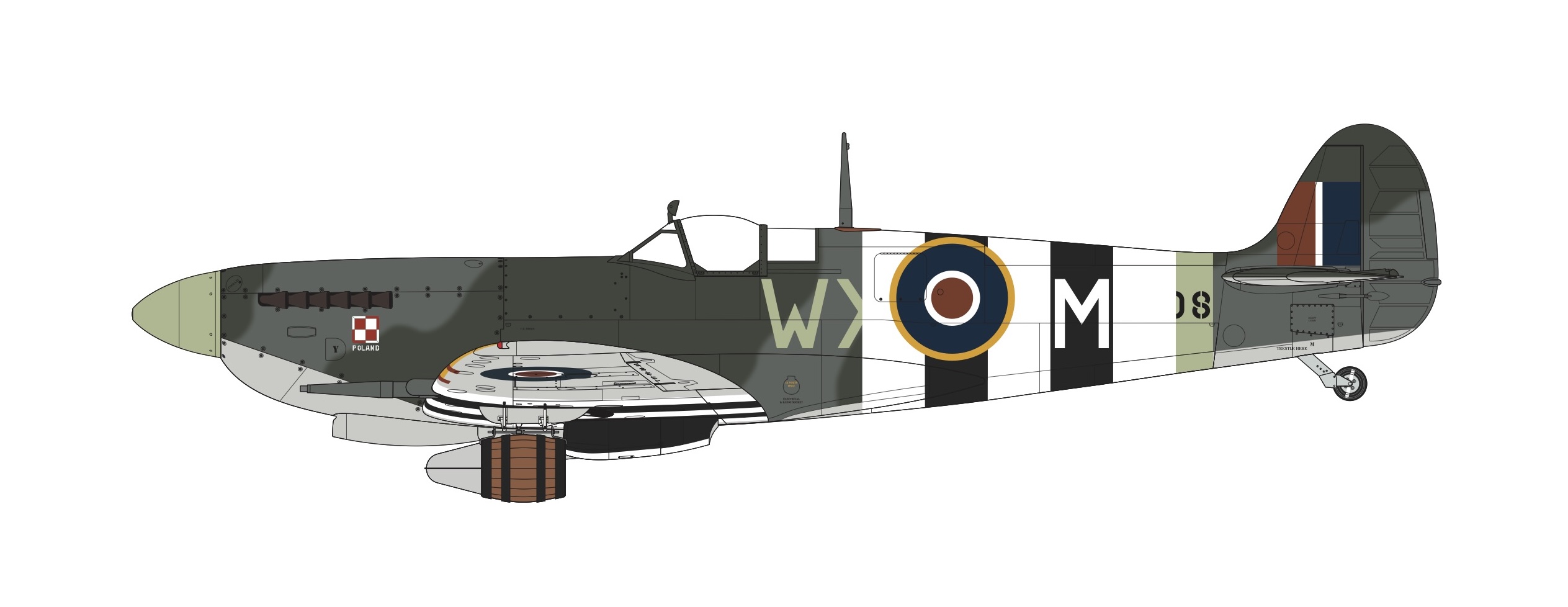
The kit includes the following schemes:
- Scheme A: Supermarine Spitfire Mk.IXc, Aircraft flown by F/L. Tadeusz Szumowski, No.302 (Polish) Squadron, Plumetot, (B.10), France, August 1944.
- Scheme B: Supermarine Spitfire Mk.IXc, Aircraft flown by F/Lt. František Vancl, No. 611Squadron, Royal Air Force Biggin Hill, England, December 1942.
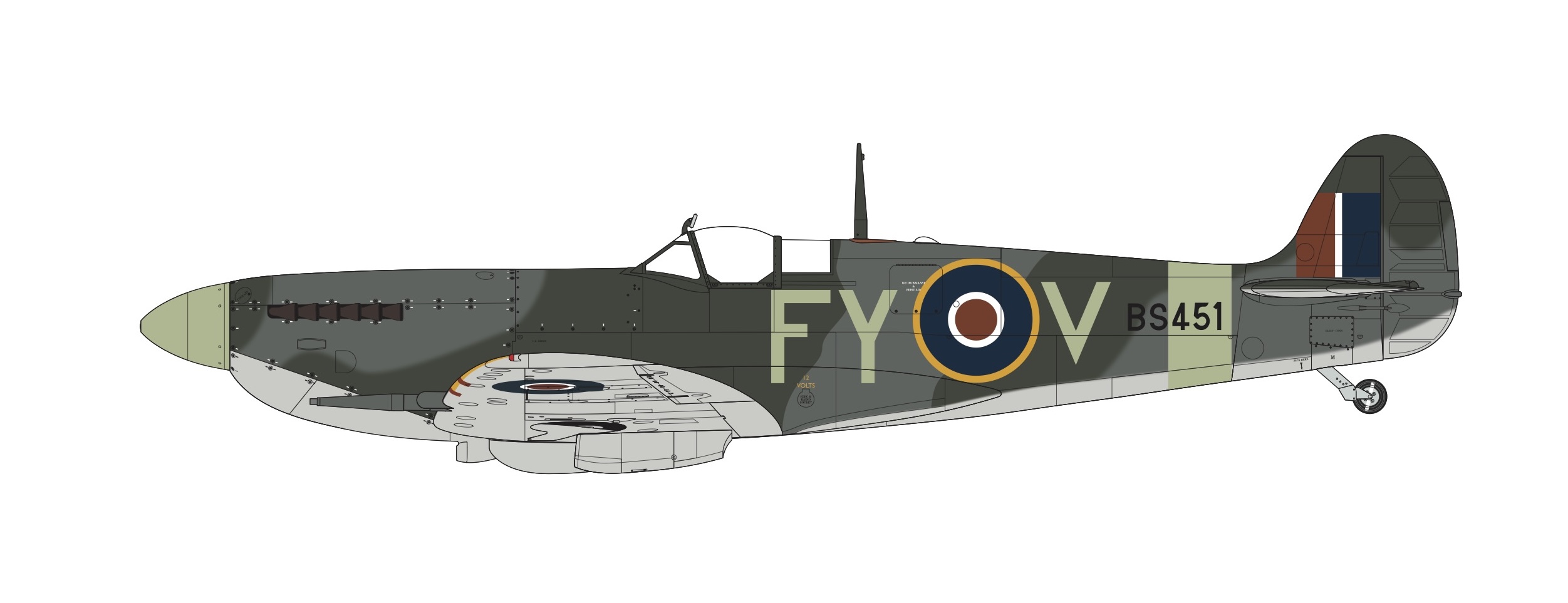
- Scheme C: Supermarine Spitfire Mk.IXc, Aircraft flown by F/Sgt. Douglas Readdy, No. 73 Squadron, Royal Air Force Ta Kali, Malta, September 1946.

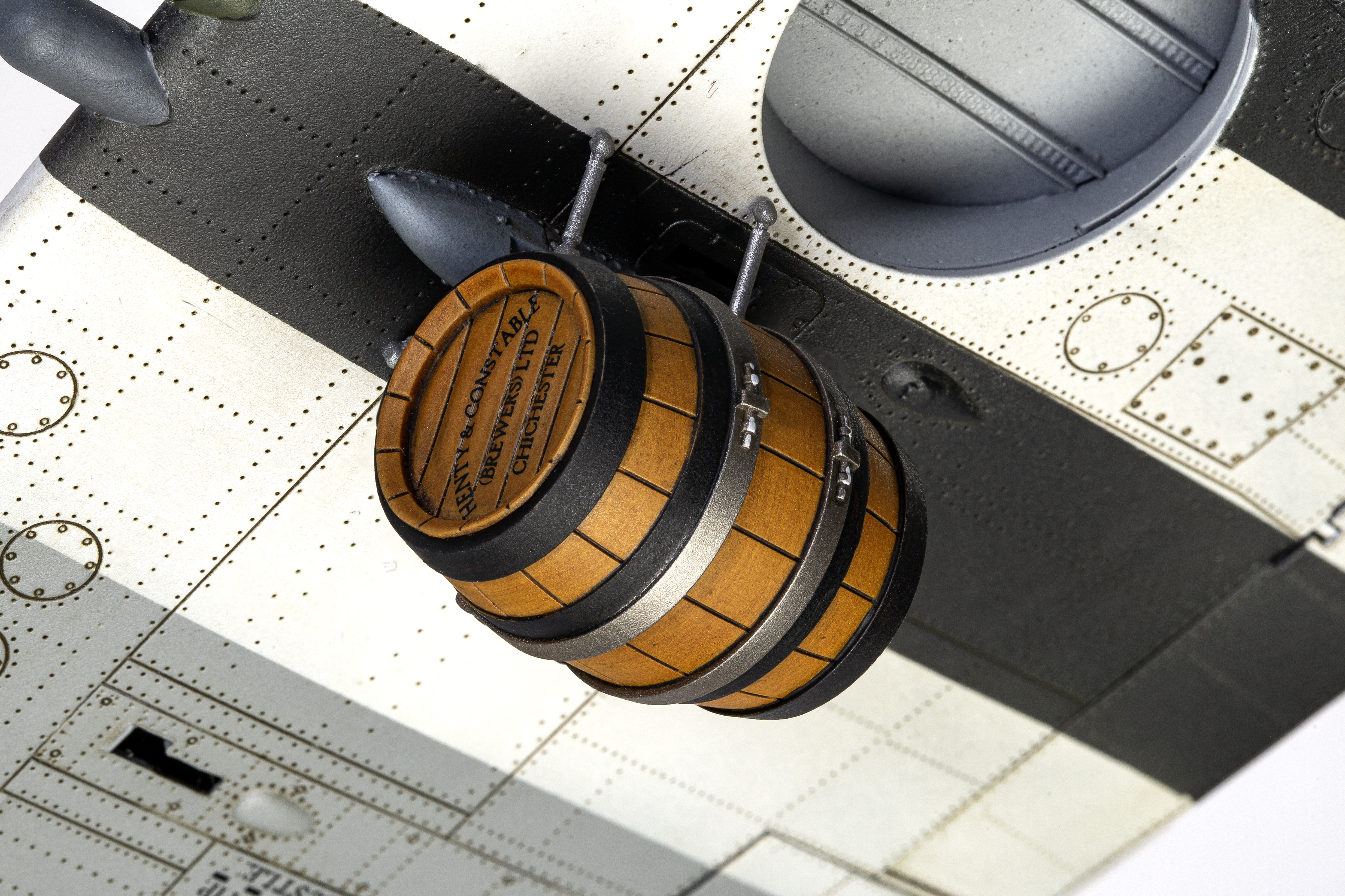
Over the years, various photographs and stories from pilots’ memoirs about Spitfires carrying beer barrels have emerged. Publications mentioning a special ‘Depth Charge Modification XXX’ whereby after the D-Day landings, squadrons based at the forward airfields in northern France would send a pilot back across the Channel in a Spitfire to collect some beer or ale in barrels strapped under the wings on modified bomb racks. Obviously, such sorties would have been deemed highly irregular by the RAF’s higher command, so the flights would not have been recorded as such in the pilot’s logbooks. Which leaves little official proof as to the exact details of these ad hoc deliveries.
Recurring details relating to these escapades frequently turn up in various secondary sources. One example is the involvement of The Henty and Constable Brewery in Chichester and the nearby RAF Ford. To raise spirits, the story was also propagandised by the newspapers of the time, accompanied by some clearly staged photographs. So, it’s difficult to determine the full and accurate story or whether the pilot’s claiming involvement in such missions were instead guilty of not letting the truth. to get in the way of a good story.
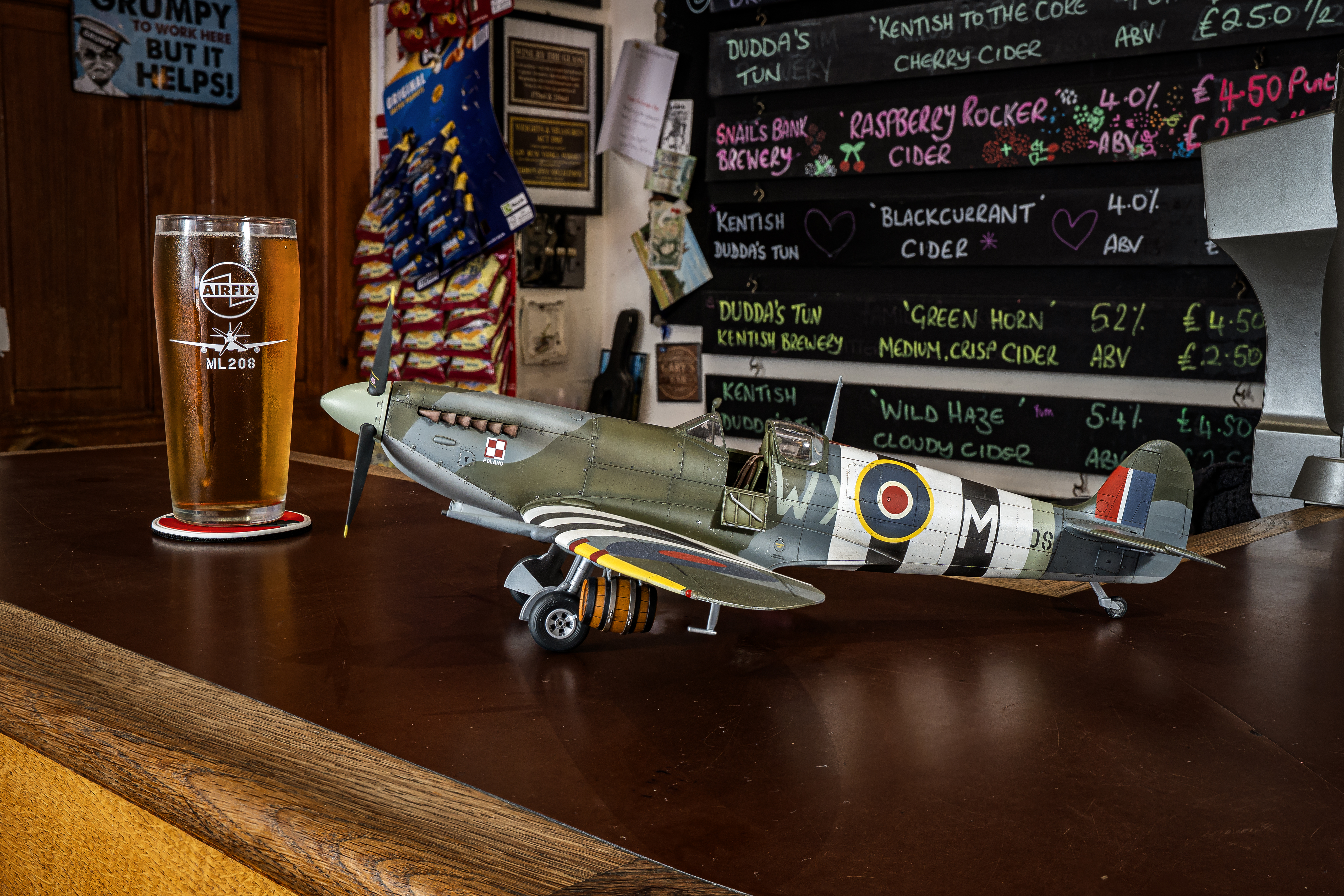
CAMRA campaigns for pubs, pints and people, which includes celebrating our beer heritage and how that fits into the history of Great Britain. The story of the Spitfires and their ‘Flying Dray’ service to the front lines of D-Day is a brilliant example of that. Airfix’s Flying Dray Spitfire kit sounds like the perfect way for beer lovers to remember this unique piece of history.
Find out more about CAMRA here.
AWAY FROM THE AIRFIX NEWS, WHAT HAVE I BEEN UP TO TODAY..?
Another Friday and the start of another weekend.
Despite today’s news that Airfix are releasing another 1/24 Spitfire, I’ve been focusing on the Tamiya Lightning preparing it for what I think will be two days of decalling, one of those almost certainly taken up with completing the weapons with their multitude of stencils.

Honestly, this thing is taking an age to complete. You’d think I would have known by now having built the Bravo model last year, but no, I ran headlong into this one, only to be surprised once more that it is built up from a billion sub-assemblies and small parts, all of which need to be painted, decalled and weathered. Seriously, I’ve built dioramas with fewer parts!
So today, I’ve finally wrapped up the paintwork and the glossing that I needed to carry out ready for the application of the decals over the next few days. Glossing the thing actually took longer than I thought, as did it, more paint. I’ve used almost two bottles of Tamiya LP Clear on this model, every part being bathed in a sealing coat of gloss, because almost everything is decorated in some form or other with decals! Still, it will be worth it, the process being far easier to complete with those layers in place, than it would be if I was to leave the model in its coloured base layers. And before anyone asks, no, I won’t ever consider skipping this step, because it’s what works for me and it cuts down on the amount of setting solutions that I need for the decals to dry out without silvering. You do you: I’ll do me.
Having chosen to complete the model in VFA-97 Warhawks colours, which, being a Navy unit will contrast with the Marines jet I completed last year. Having made this decision, I hunted for pictures, finding many of the aircraft in immaculate schemes. Initially, this was my route to completion, but a chat with Marcus Nicholls, soon turned my head towards a more weathered approach.

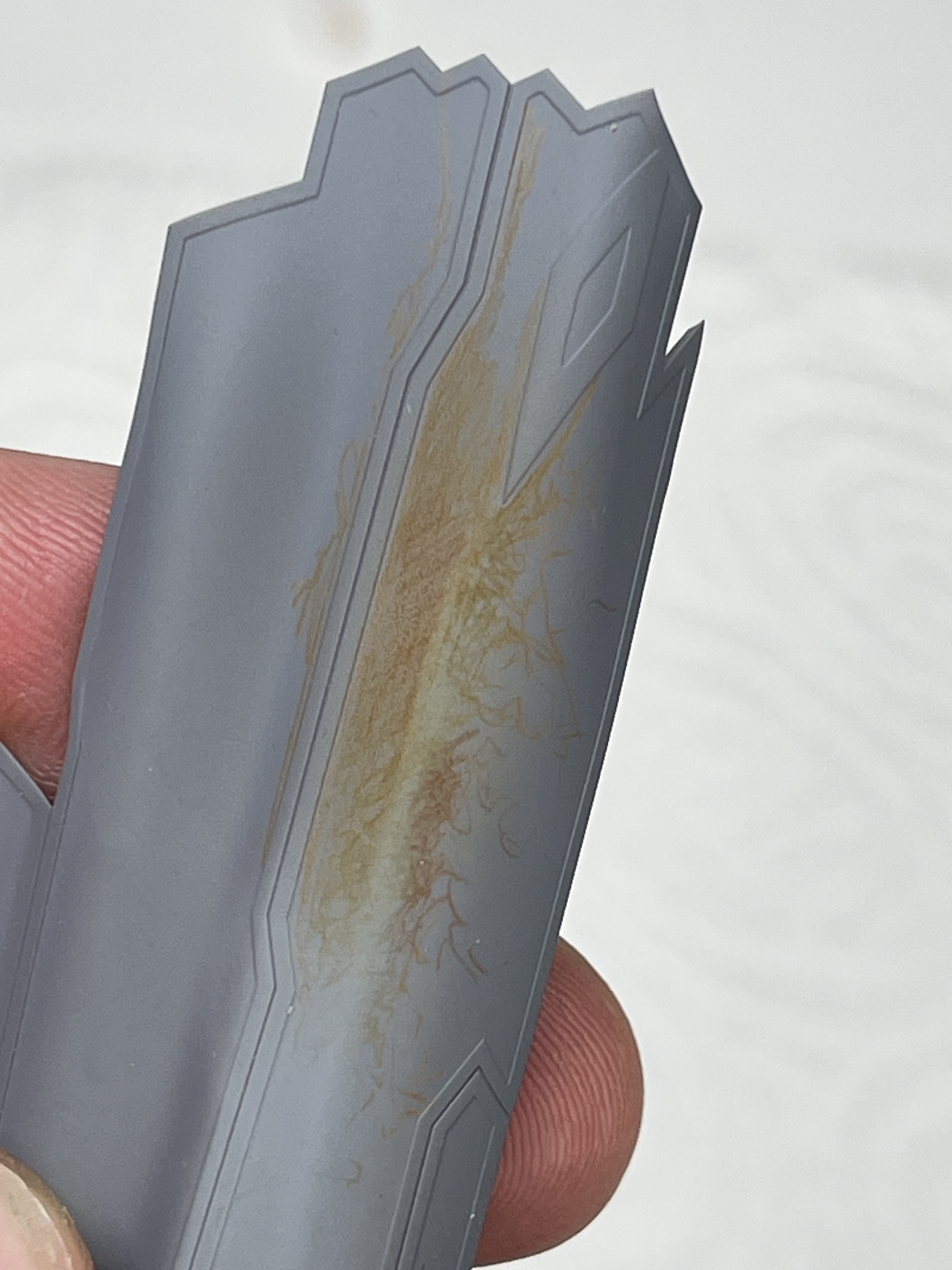
This entails replicating the oddly ‘rusty’ look that the jets seem to have taken on onboard ship, their upper flanks appearing to show an almost gold patina that contrasts well with the surrounding grey paintwork. Truth be told I had no idea how to do this, but I’ve now settled – after some experimentation – on replicating this corrosion with a mixture of coloured pencils and oil paints. Below you can see me playing with the ideas on one of the closed weapons bay doors, with both the pencilled stains and those created with pure oils, now in place.

So tomorrow I’ll start to apply the decals and then I can deal with some weathering. Like I say, I can see the decalling taking two days to complete, with the weathering and final assembly a few days more. It has to be completed by the end next week so I can’t really play around with it too much, so fingers crossed I don’t make too many mistakes on the road to completion.
See you tomorrow.
 SPENCER POLLARD'S KIT BOX
I’ll have to agree, the modern jets have a proliferation of “do not touch” stencils. F4 Phantoms are a particular issue. I spent 3 days on a Tamiya F14 in CAG colors between clear gloss, decal, setting solution, clean up, finally clear flat. The larger the kit the more the time spent. In the end though it’s worth it to see that plane look so realistic. I haven’t done a stealth craft yet partly due to not having the ability to observe one up close to get proper weathering ideas, though good pictures in publications are becoming available. I’m sure if anyone can do it realistically it’s you.
LikeLike