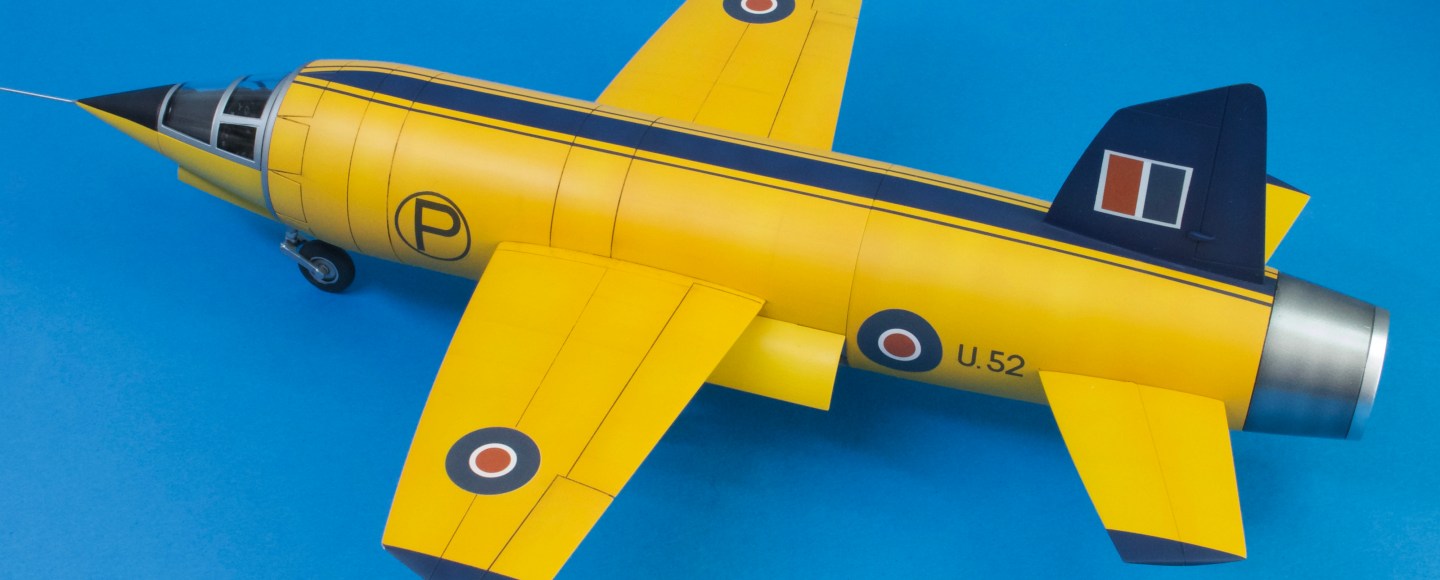

Assembly was very easy once the parts have been cleaned up, making it the perfect introduction to 3D printed kits, everything that you need being included in the kit, including a superb clear resin canopy and some very useful canopy masks.
11th April 2025
Good afternoon, everyone. How are you all on this wonderfully sunny day?
Well here we are again, another Friday afternoon and another completed model in the bag for Model Airplane International. This time around it is something a little simpler than normal, a ‘what-if’ study of the Miles M.52, a paper design that was intended to fly faster than sound, but as we all know, was cancelled before it ever took flight.

The following extract is taken form the wikipedia page on the M.52 which is filled with plenty of written details one its design, technology and eventual cancellation. It’s a fascinating read…
“The Miles M.52 was a turbojet-powered supersonic research aircraft project designed in the United Kingdom in the mid-1940s. In October 1943, Miles Aircraft was issued with a contract to produce the aircraft in accordance with Air Ministry Specification E.24/43. The programme was highly ambitious for its time, aiming to produce an aircraft capable of a speed of at least 1,000 miles per hour (1,600 km/h) during level flight, and involved a very high proportion of cutting-edge aerodynamic research and innovative design work.”

Having discussed this kit over the last week on so on here, it is great to finally have the completed model on my desk. Build for Brett Green and Model Airplane, this was. relatively simple project that took around 4 days (25 hours) to build and paint, making it something of a change of pace from the more complex builds that have occupied my mind over the last year or so.
As a kit, the M.52 shows once again what is possible from this emerging medium. This will be the third fully printed kit that I’ve built over the years, with both Aerocraft’s Type 75 and Resin Scale’s Centurion AX both crossing my desk within the last six months.
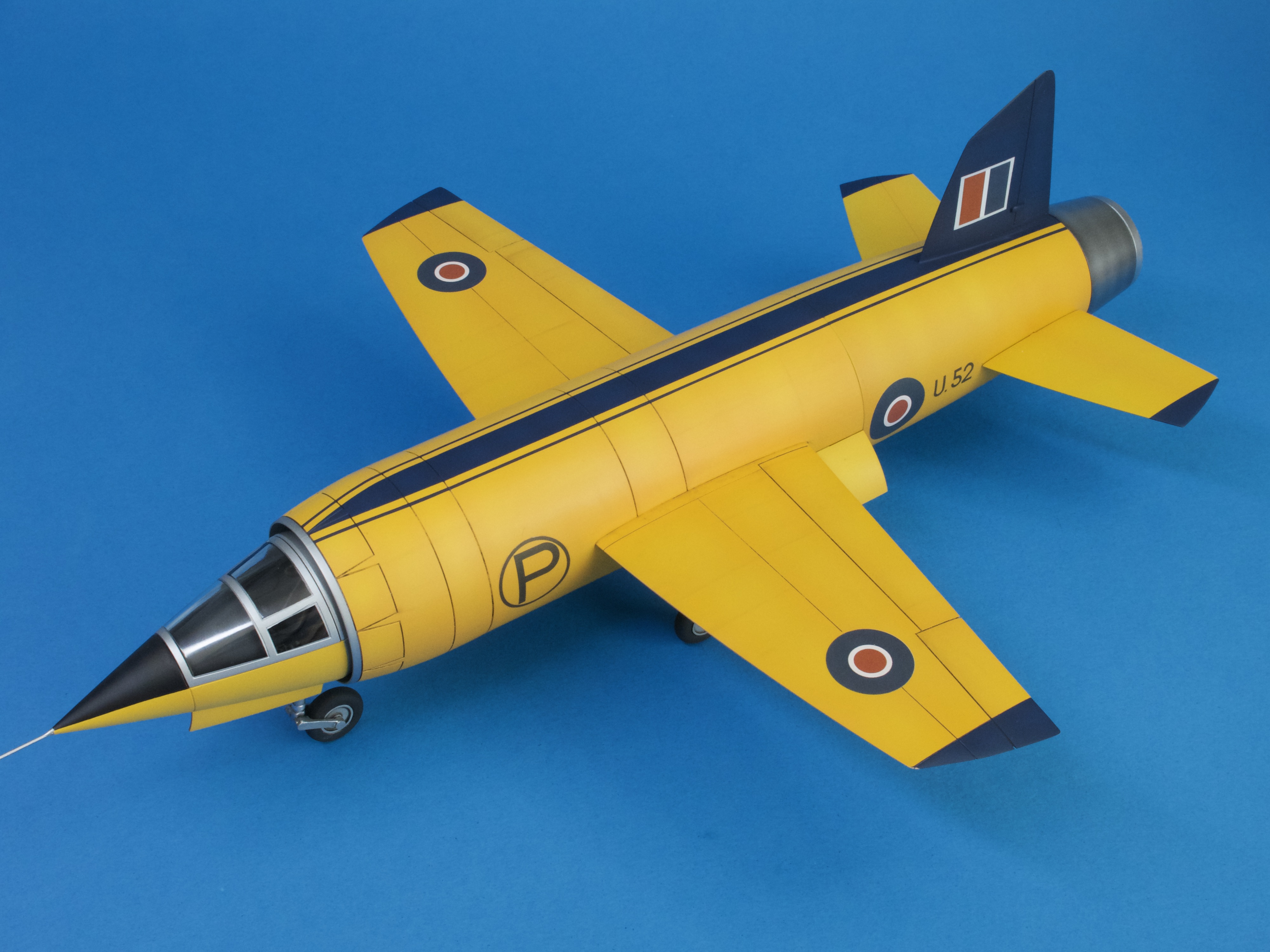
What I liked about the kit was its design, the printing of the components and the precise fit, all being very good indeed. Assembly was very easy once the parts have been cleaned up, making it the perfect introduction to 3D printed kits, everything that you need being included in the kit, including a superb clear resin canopy and some very useful canopy masks.
Two colour schemes are offered, imaginary of course, one in overall natural metal and the other in Trainer Yellow. Paint them as suggested, or do as I did and let your imagination take you in different directions. After all the thing never flew, so you can’t be wrong!
For more information on this kit, please see my earlier post:
Though I’ll obviously keep the meat and potatoes of this build back for the feature in MAI, a thought or two here might not go amiss.
This kit is part of a collection of three models, 1/72, 1/48 and this larger 1/32 offering. Having now built the kit, I feel that the smaller versions will suit the kit more than the one in 1/32. In terms of overall detail, what would be very impressive in 1/72 for example, doesn’t quite work in 1/32, where I would have liked to have seen more complexity befitting the scale.
Though I’ve not seen those other kits the parts are identical only the scales being changed, which accounts for the issues I see in this one. That’s not to say I am disappointed with what I have, I’m not, the sheer bulk of the model and its presence on my desk being very pleasing. My point is that there is more to a larger scale model than a simple upscale. The larger the model, the more detail can be seen and thus needs to be included. Of course all of that takes time, effort and money to achieve so once again, I understand the constraints. I also understand that the more complex the kit, the more expensive it becomes. Using the same designs allows choices to be offered without an alarming increase in cost to the modeller. That being so, my opinion really needs to taken on board with those points, fully understood. In this day and age of increasing costs its all a matter of maximising resources, so Aerocraft’s approach to this series of kits is more than sensible.
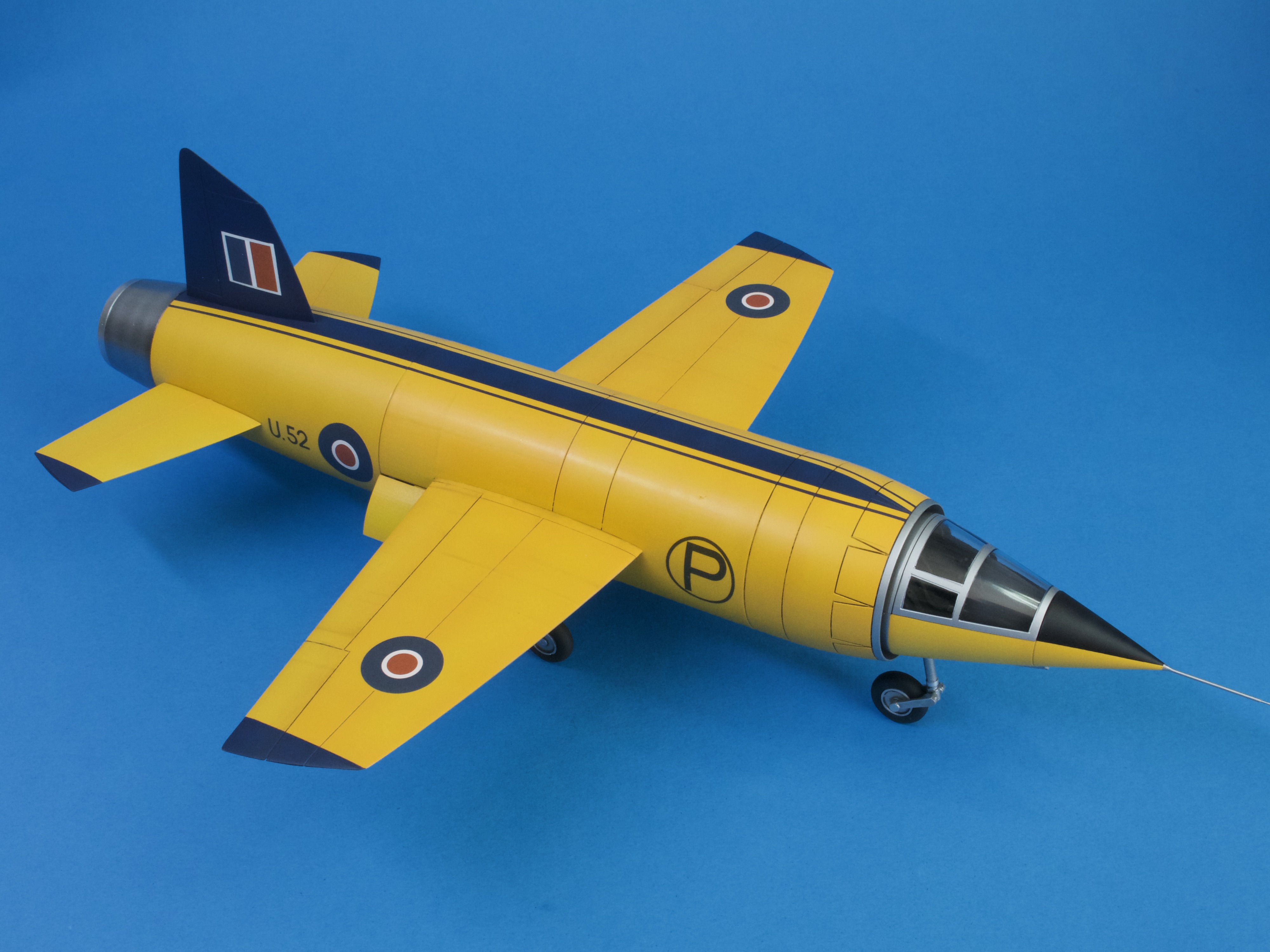
Overall, I enjoyed this project and I’m happy to add another quirky footnote to my collection of aviation oddities. Given the sheer number of paper projects that emanated from the drawing boards of the UK’s aircraft manufacturers following the end of the Second World War, I’m sure Aerocraft will not be short of subjects should they wish continue down this path. I for one look forward with anticipation to what they come up with next.
See you tomorrow.
- A MODELMAKER’S LIFE: HELLO AND GOODBYE…FOR NOW!
- A MODELMAKER’S LIFE: WINDING DOWN…
- A MODELMAKER’S LIFE: FUTURE BOOK PLANS…
- A MODELMAKER’S LIFE: A SIMPLE DAY OF WRITING…
- A MODELMAKER’S LIFE: LEOPARDS, METEORS AND MORE WORK ON MY NEW SPITFIRE BOOK…
Hi, Can I please politely ask if your excellent blog is to continue, or has it stopped indefinitely? King regards.…
The content is very well organized, allowing readers to easily grasp the key points without feeling overwhelmed by too much…
No, The pilot never went into any kind of prison camp from my recollection
Fabulous build, Spencer! I’m currently building this kit as well and have t say the fit is amazing. My only…
Everyone needs a “reset” on occasion. Enjoy and hopefully you can return with renewed enthusiasm. I compare my resets to…


 SPENCER POLLARD'S KIT BOX
Wow,1000mph design speed left plenty of margin for error to beat the sound barrier .
LikeLike
This maybe of interest
https://www.flickr.com/photos/themekon/53034608418/in/album-72177720303859857
LikeLike